Essential Insights from a Top Premises Liability Lawyer Tennessee
Key Takeaways
Tennessee commercial property owners can be held legally responsible when unsafe conditions cause premises liability injuries to customers, tenants, and visitors on their property.
DZ Law, PLLC, based in Blount County, represents clients throughout Sevier, Blount, Knox, Loudon, Jefferson, and Cocke Counties in premises liability claims involving businesses, shopping centers, parking lots, hotels, and other commercial properties.
Tennessee premises liability law examines visitor status, notice of the danger, and whether the business acted reasonably to prevent a premises liability accident, including addressing negligent security risks.
Most Tennessee premises liability cases carry a strict one-year statute of limitations, so injury victims should call DZ Law at (865) 259-0020 or message us online as soon as possible after an incident.
DZ Law handles serious injuries and wrongful death claims and works to recover compensation for medical expenses, lost income, pain and suffering, and other damages caused by a property owner's negligence.
Introduction: Premises Liability and Commercial Property Owners in Tennessee
A premises liability lawyer helps individuals injured on someone else's property due to unsafe conditions. If you are searching for a premises liability lawyer Tennessee, you are likely seeking answers after being hurt on commercial property. This article is for individuals injured on commercial property in Tennessee seeking legal guidance. Understanding your rights and the legal process is crucial for protecting your interests after an accident.
When you walk into a restaurant, browse a retail store, or check into a hotel, you expect the property to be reasonably safe. If you were hurt because a business failed to fix or warn about a dangerous condition, a premises liability lawyer in Tennessee helps protect your rights and pursue compensation from the property owner or occupier whose negligence caused the injury. A premises liability lawyer helps individuals injured on someone else's property due to unsafe conditions. Understanding how Tennessee premises liability law works is an important first step after an accident on commercial property.
Commercial property owners in places like Maryville, Knoxville, Sevierville, and surrounding East Tennessee communities have a legal duty to keep their premises reasonably safe for lawful visitors. When they do not, residents and tourists injured at retail stores, restaurants, apartment complexes, office buildings, hotels, shopping centers, or entertainment venues may have grounds for a premises liability claim. This article explains the duties commercial property owners owe, the kinds of claims that can arise, how visitor status affects a case, the injuries and damages involved, how fault is proven, what steps to take after an accident, the Tennessee filing deadline, and how legal representation can help.
DZ Law, PLLC is a Blount County-based team of personal injury lawyers who handle premises liability cases as a core practice area, alongside construction litigation and arbitration, business and commercial litigation, medical malpractice, appeals and federal court litigation, and business transactions and contracts. If you've suffered injuries on commercial property, call DZ Law at (865) 259-0020 or send us a message online for a confidential premises liability case review.
Legal Duties of Commercial Property Owners in Tennessee
Under Tennessee premises liability law, property owners must maintain safe conditions for visitors. This means conducting reasonable inspections of the property, discovering dangers before someone gets hurt, fixing hazards within a reasonable time, and warning visitors of unsafe conditions that cannot be immediately repaired. In Tennessee, property owners must provide a safe environment for visitors, and this obligation applies to every area the public or tenants can access.
Tennessee courts consider whether a hazard was foreseeable, how long it existed, and whether a reasonably careful owner or occupier would have discovered and corrected it. Property owners must inspect premises for dangerous conditions regularly. Landlords must keep residential properties safe for tenants and visitors as well, including common areas in apartment complexes and multi-tenant commercial buildings. Commercial property owners, property managers, tenants, and even government entities operating public buildings can be held liable in premises liability cases depending on who controlled the unsafe condition.
Invitees, Licensees, and Trespassers: How Visitor Status Affects a Premises Liability Claim
Tennessee law historically classified visitors into three categories, each with a different level of protection. Understanding your legal status matters because it determines what property owners owe you.
Invitees receive the highest duty of care. These are shoppers at a Knoxville retail store, diners at a Maryville restaurant, or patients visiting a medical office - people present for the business's benefit. Property owners owe invitees active inspection and maintenance duties.
Licensees are social guests or people entering property for their own purposes. The Tennessee Supreme Court's landmark decision in Hudson v. Gaitan (1984) abolished the rigid distinction between licensees and invitees, holding that social guests are owed the same reasonable care as invitees. Commercial properties sometimes host events where mixed-status visitors may be present.
Trespassers generally receive the lowest protection. Tennessee imposes a lesser duty toward trespassers, typically requiring only that owners avoid willful or wanton misconduct. However, commercial owners may owe heightened duties when children are attracted by features like a swimming pool or construction equipment under the attractive nuisance doctrine.
Determining visitor status is fact-specific. DZ Law can analyze your status and rights during an initial consultation.
Common Types of Premises Liability Claims on Commercial Properties
DZ Law regularly sees a range of commercial premises liability claims across Sevier, Blount, Knox, Loudon, Jefferson, and Cocke Counties. Common premises liability cases include slip and falls and dog bites, but the full spectrum of types of premises liability incidents on business properties is much broader. These accidents can lead to serious injuries such as fractures, traumatic brain injuries, spinal cord damage, internal injuries, and wrongful death.
If you were hurt in a business or commercial setting, contact DZ Law at (865) 259-0020 or message us online to discuss your premises liability claim.
Slip-and-Fall and Trip-and-Fall Accidents in Tennessee Businesses
Slip-and-fall accidents are among the most common premises liability cases in Tennessee. Wet floors are a frequent cause of slip and fall accidents, along with tracked-in rain or snow, loose mats at store entrances, uneven flooring at shopping centers, and broken pavement in parking lots. Slip and fall injuries often involve the head, spine, and lower extremities.
Tennessee premises liability law often turns on whether the business created the condition, knew about it, or should have known about it through reasonable inspections. For example, in Blair v. West Town Mall (2004), the Tennessee Supreme Court held that constructive notice can be established through a pattern of recurring incidents or a general continuing condition, even if the business didn't create the specific hazard that caused the injury.
Time-sensitive evidence like surveillance footage, incident reports, and cleaning logs can be critical in proving a premises liability accident claim. DZ Law works quickly to send preservation letters, obtain video, and interview witnesses to document how and why a fall occurred.

Negligent Security and Assaults on Commercial Property
Negligent security is a specific type of premises liability involving criminal acts by third parties at places like hotels, apartment complexes, nightclubs, shopping centers, and parking garages. Inadequate security can result in injuries on commercial properties when business owners fail to take reasonable precautions.
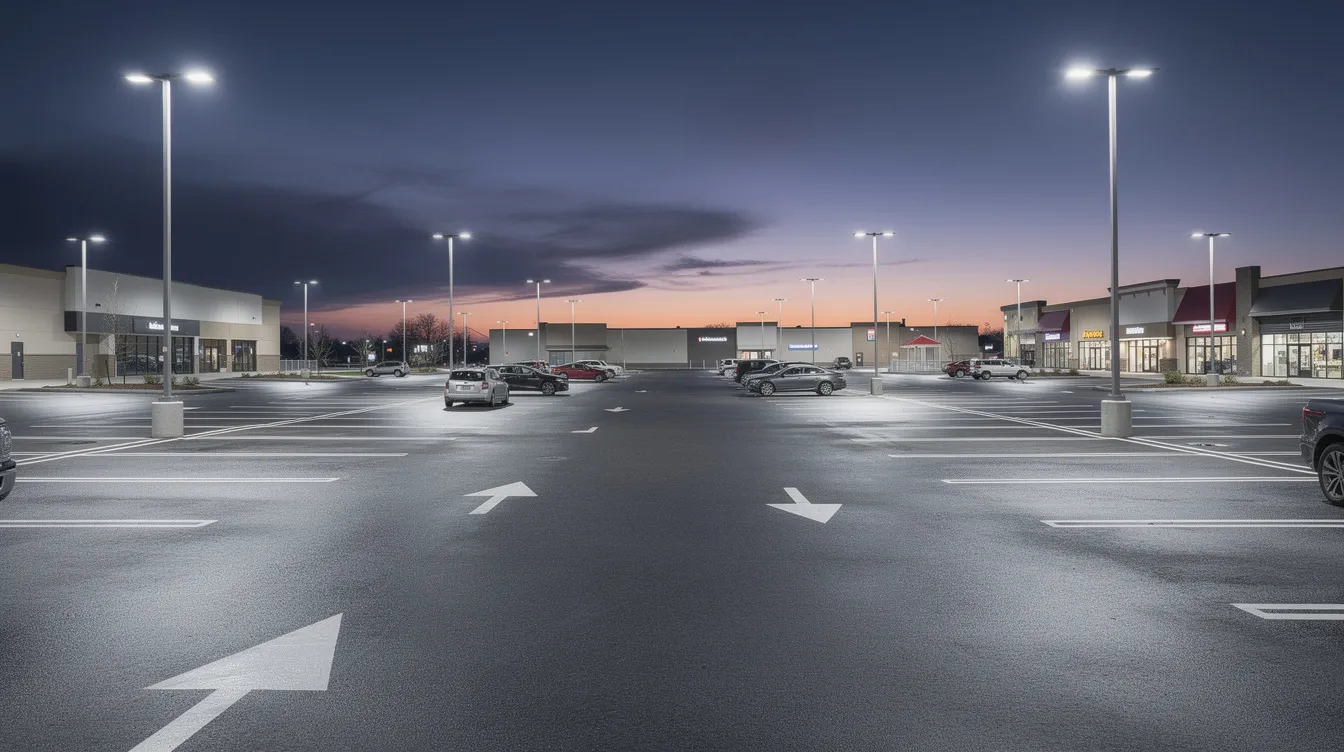
Tennessee businesses may be held liable when foreseeable criminal activity occurs and reasonable security measures - such as lighting, locks, access control, cameras, or trained staff - were missing or poorly maintained. Poor lighting can lead to serious injuries on properties, and inadequate lighting in parking areas and stairwells is a recurring issue in negligent security claims. Consider an assault in a dimly lit Knoxville parking lot or an attack at a Sevier County tourist-area hotel without working cameras or a secure entry system.
Negligent security cases are evidence-intensive and often require police reports, crime statistics, maintenance records, prior complaints, and expert testimony. If you were the victim of an assault on commercial property, contact DZ Law at (865) 259-0020 or reach out online promptly to protect your rights.
Unsafe Stairs, Handrails, and Building Code Violations
Many premises liability cases in Tennessee arise from unsafe stairways, missing or loose handrails, uneven treads, poor lighting, or violations of local building and fire codes in commercial structures. Inadequate lighting can lead to serious injuries on properties, particularly in enclosed stairwells and multi-level parking garages.
DZ Law's work in construction litigation and arbitration gives the firm direct familiarity with construction standards, building codes, and structural safety issues that overlap with premises liability claims. Code violations and inadequate maintenance at office buildings, multi-level retail stores, parking garages, and apartment complexes can support a finding that the owner or a maintenance company was negligent. Consider a tenant falling on a poorly lit stairwell with a broken handrail in a Knox County apartment building - a scenario DZ Law has encountered repeatedly.
Falling Merchandise and Other Interior Hazards
Falling objects can cause significant injuries in commercial spaces. Improperly stacked merchandise in warehouse clubs, home improvement stores, and big-box retailers can topple onto unsuspecting customers. Other interior hazards include unsecured shelving, broken fixtures, malfunctioning automatic doors, and cluttered walkways that lead to premises liability injuries.
Tennessee law may hold both national retailers and local business owners responsible when dangerous stocking practices or poor property maintenance cause harm. Prompt documentation of the store setup, employee actions, and any prior complaints is essential in these premises liability cases.
Parking Lot, Sidewalk, and Exterior Property Dangers
Exterior premises liability claims frequently involve potholes, crumbling curbs, ice or snow accumulation, inadequate drainage, poor lighting, and missing warning signs in commercial parking lots and walkways. East Tennessee's seasonal weather - ice, snow, and heavy rain - amplifies these risks.
Ownership and control of exterior areas can be complex, often involving landlords, tenants, and property management companies. DZ Law analyzes these relationships in detail when identifying who can be held liable. A customer might trip on a broken curb at a shopping center in Loudon County, or slip on untreated ice outside a Jefferson County office building. In some cases, exterior areas may be maintained by government entities, triggering special notice requirements and damage limitations under the Tennessee Governmental Tort Liability Act.
Serious Premises Liability Injuries and Damages
Premises liability injuries on commercial property can range from minor sprains to catastrophic, life-changing harm or wrongful death. Falls cause about 3 million emergency visits annually for older adults, and business properties are a significant source of these incidents.
Common serious injuries include:
Fractures and joint injuries
Traumatic brain injuries (common from slip and fall accidents)
Spinal cord injuries resulting from unsafe property conditions
Internal organ damage
Complex soft-tissue injuries
Psychological trauma following assaults or severe falls
Amusement park injuries at tourist attractions
In Tennessee, injured people who have suffered actual damages may recover compensation for both economic and non-economic losses. Compensation can cover current and future medical needs, including rehabilitation costs like physical therapy. Lost wages can be recovered if injuries cause missed work, and victims can seek compensation for diminished earning capacity, pain and suffering, emotional distress, loss of enjoyment of life, and property damage incurred. Families may pursue wrongful death claims when a loved one dies due to unsafe commercial property conditions, seeking damages like funeral costs and loss of financial support.
DZ Law evaluates the full scope of damages, often coordinating with medical providers and vocational experts, particularly in cases involving long-term disability. The goal is always to pursue maximum compensation for the harm our clients have endured.
Proving Fault in Tennessee Premises Liability Cases
Tennessee premises liability claims are fact-driven and require proof of four elements by a preponderance of the evidence: duty of care, breach of that duty, causation, and damages. Successful premises liability claims must establish that the property owner knew or should have known about hazards on the property. Property owners are liable for injuries from known hazards they fail to fix - the central question is always whether the owner acted reasonably.
Evidence of notice (actual or constructive), maintenance and inspection practices, prior incidents, and code violations supports a finding that a commercial property owner failed to act reasonably. A premises liability lawyer investigates accidents and gathers evidence for claims, and early legal involvement is critical so DZ Law can preserve surveillance video, obtain incident reports, secure witness statements, and retain appropriate experts such as accident reconstruction specialists.
Notice, Inspections, and Maintenance Records
The difference between actual notice and constructive notice is often decisive in most premises liability cases. Actual notice means the business knew of the danger - for example, an employee saw a spill and walked away. Constructive notice means the condition existed long enough that a reasonable business should have discovered it through routine inspections.
Consider a spill that remained on a grocery store floor for 45 minutes before a customer fell, or a broken handrail that tenants had reported through prior complaints for months. In the Trentham v. Mid-America Apartments (2025) decision, the Tennessee Supreme Court affirmed a roughly $2 million damages award against an apartment complex where microbial growth on a pedestrian bridge constituted a general or continuing condition giving constructive notice - and the owner could produce no evidence that its annual pressure-wash policy had been followed.
Written complaints, prior incident reports, maintenance logs, and employee testimony are vital in proving notice and inadequate inspections. DZ Law reviews inspection policies, cleaning schedules, and contractor agreements to determine where the breakdown occurred. In Tennessee, documenting hazardous conditions and incidents is critical for premises liability cases.
Comparative Fault and the "Open and Obvious" Argument
Tennessee applies modified comparative fault: an injured person cannot recover compensation if they are 50% or more at fault for the accident. If at least 50% at fault, no damages can be recovered. Below that threshold, damages are reduced by the injured party's percentage of fault. This is a key area of disputed liability in many premises liability cases.
Commercial defendants and insurers frequently argue that a hazard was "open and obvious" - that the visitor should have seen the danger and avoided it. For example, a business might point to visible cones, caution tape, or a clearly wet surface. Tennessee courts, however, analyze whether the business still should have anticipated harm despite the obviousness of the condition, especially in high-traffic or distracting commercial environments where customers are focused on merchandise, signage, or other activities.
DZ Law counters these defenses by focusing on inadequate safety practices, poor design choices, and the realities of how customers and tenants use the property. Comparative negligence is often contested, and an injured person should never assume they have no case simply because a business or insurer blames them.
Steps to Take After a Premises Liability Accident on Commercial Property
If you've been injured at a business in East Tennessee, what you do in the hours and days afterward matters significantly. Here is a practical guide:
Seek immediate medical attention. Even if your injuries appear minor, get evaluated by a medical professional. Some conditions - including traumatic brain injuries and internal injuries - may not show symptoms right away. Seek immediate medical attention after a premises liability accident, and keep records of all treatment and medical bills.
Report the incident. Notify the property owner or manager about the incident promptly. Request a written incident report and obtain a copy or reference number.
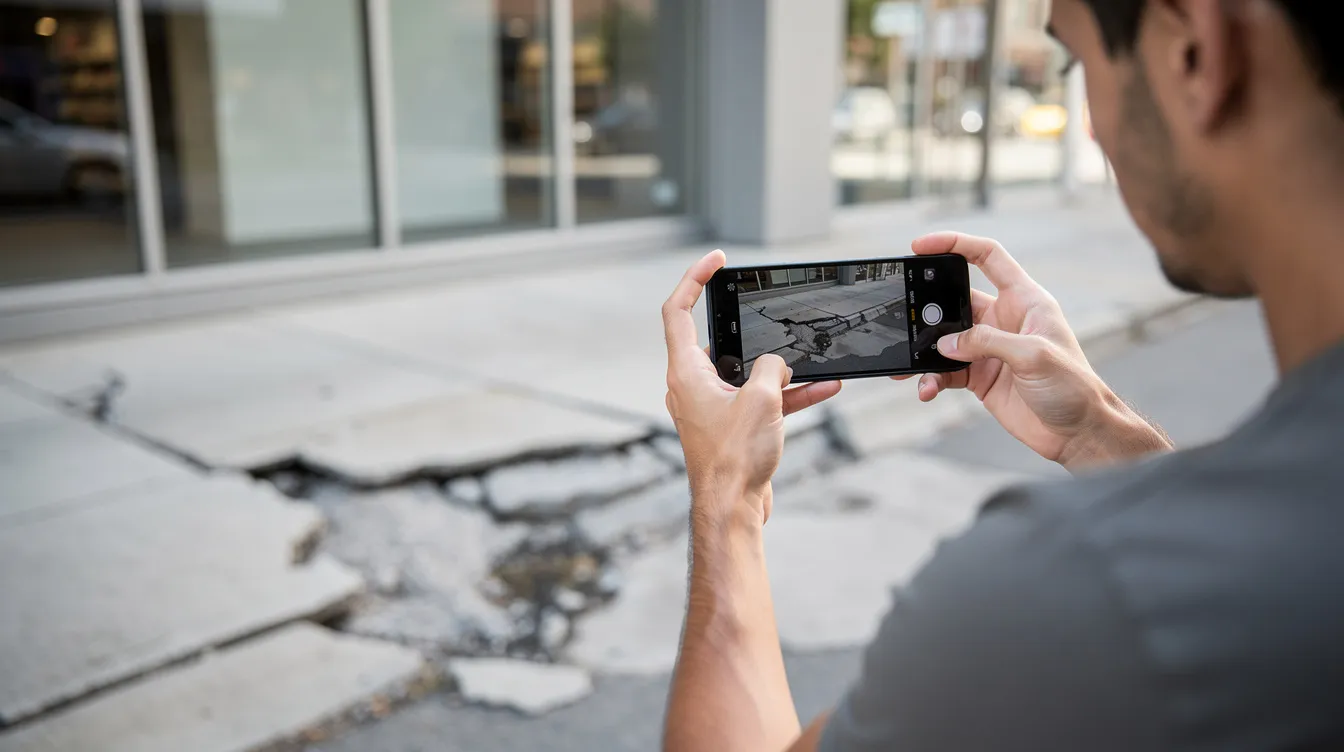
Document the scene. Document the accident scene with photos and witness information. Take photos or videos of the hazardous condition, lighting, the surrounding area, your footwear, and any visible injuries. Collect contact information from witnesses.
Preserve evidence. Keep any clothing or personal property involved. Request that the business preserve maintenance logs, incident reports, and surveillance footage. Preserve evidence like maintenance logs and incident reports - these records often disappear quickly if no one asks for them.
Avoid recorded statements. Do not give recorded statements to insurance adjusters or sign documents before consulting with a premises liability lawyer. Anything you say can be used to reduce or deny your claim.
Contact DZ Law at (865) 259-0020 or send us a message online for guidance on your next steps. The sooner you reach out, the better your chances of preserving the evidence that matters most.
Why Commercial Premises Liability Cases Are Different - and How DZ Law Helps
Claims against commercial property owners often involve layers of complexity that individual property disputes do not. Corporate structures, layered insurance coverage, lease agreements between landlords and tenants, and institutional risk management practices can make it difficult for an injured person to determine who is responsible and what resources are available.
DZ Law's broader experience in business and commercial litigation, construction litigation and arbitration, and appeals and federal court litigation helps the firm navigate disputes with sophisticated defendants and insurers. The firm investigates the allocation of maintenance responsibilities between landlords and tenants, reviews vendor and contractor agreements, and analyzes how business practices contributed to hazardous conditions on unsafe properties.
When the property owner failed to maintain safe premises, and settlement negotiations do not reflect the full value of a client's premises liability injuries and damages, DZ Law is prepared to litigate aggressively in state or federal court. The firm also encourages business owners and property owners to consult DZ Law proactively about risk management and contract drafting through the firm's business transactions and contracts practice to reduce future liability exposure. When else's negligence causes injury on else's property, having an experienced premises liability attorney who understands both the litigation and the business side makes a measurable difference.
Statutes of Limitation and Deadlines in Tennessee Premises Liability Claims
Tennessee has a strict one-year statute of limitations for filing premises liability claims. Under Tennessee Code § 28-3-104, most personal injury and premises liability claims - including those from commercial property incidents - must be filed within one year of the date the injury occurred. For comparison, you have two years to file a premises liability claim in Texas, but Tennessee's deadline is half that, leaving much less room for delay.
Wrongful death claims carry the same one-year deadline. Claims involving government entities may be subject to additional rules and shorter notice requirements under the Tennessee Governmental Tort Liability Act, which also imposes a 12-month filing window along with strict written notice provisions.
Missing these deadlines can bar recovery entirely, regardless of how strong the premises liability case might be. Contact DZ Law as soon as possible after an accident so the firm can investigate, preserve evidence, and ensure all deadlines are met. Call (865) 259-0020 or reach out online for a timely evaluation of your claim.
How DZ Law, PLLC Handles Tennessee Premises Liability Cases
DZ Law represents clients injured on commercial properties throughout East Tennessee, guiding them from the initial consultation through potential trial or appeal. The firm's approach includes:
Initial case evaluation: Review of medical records, medical expenses, incident reports, photos, and any correspondence with insurers or property owners to determine whether a property owner's negligence led to the client's injuries.
Investigation: Site inspections, preservation of surveillance video, review of maintenance and safety policies, and identification of all potentially liable parties - owners, tenants, managers, contractors, and in some cases, government entities. Where appropriate, the firm works with accident reconstruction specialists and safety experts.
Negotiation: Preparation of detailed demand packages and direct negotiation with insurance companies to seek fair compensation and recover damages reflecting the true cost of a client's injuries sustained on a person's property.
Litigation and trial: When needed, filing a premises liability lawsuit and preparing the case for trial. DZ Law's appellate and federal court litigation experience allows the firm to handle complex legal issues that might arise in larger premises liability claims, including those involving multi-state corporate defendants.
Attorneys in Tennessee may work on a contingency fee basis in premises liability cases, which means there are no upfront fees and no upfront costs - DZ Law only gets paid if you recover compensation. This arrangement allows injury victims to work with experienced premises liability attorneys and experienced personal injury attorney representation without financial risk.
Serving Blount County and Surrounding East Tennessee Communities
DZ Law is based in Blount County and regularly represents clients injured on commercial property in Maryville, Alcoa, Knoxville, Sevierville, and across Sevier, Blount, Knox, Loudon, Jefferson, and Cocke Counties. The firm understands local courts, local businesses, and regional conditions - seasonal tourism traffic in Sevier County, mountain weather that creates icy sidewalks in winter, and the construction growth that accompanies East Tennessee's expanding economy.
Whether you are a local resident who suffered harm at a rental property, a tourist who was hurt while visiting a Gatlinburg hotel, or a worker injured in a commercial building's common area, DZ Law is here to help. The firm represents people who have suffered injuries due to poor property maintenance, inadequate security, swimming pool accidents, or any other condition where a property owner failed to warn visitors or maintain a safe environment.
Schedule a free consultation by calling (865) 259-0020 or using the online contact form.
Frequently Asked Questions About Tennessee Premises Liability Claims
The following FAQs address common concerns not fully covered in the main article, focusing on commercial premises liability in Tennessee. These answers are general, and DZ Law can provide advice tailored to your circumstances during a consultation.
Do I have a premises liability case if I was injured while visiting a business as a tourist in East Tennessee?
Tourists and visitors from out of state have the same rights as Tennessee residents when injured due to unsafe conditions on commercial property. What matters is whether the property owner or occupier breached their duty of care, whether that breach caused the premises liability accident, and whether the visitor suffered compensable injuries. DZ Law routinely assists out-of-state clients injured at hotels, attractions, and retail locations in Sevier County and surrounding tourism areas. If you have already returned home, contact DZ Law promptly so the firm can preserve evidence locally on your behalf. Texas law requires property owners to exercise ordinary care for safety, and Tennessee imposes a similar standard - the location of your home state does not diminish your rights under Tennessee law.
Can I still recover compensation if I was partially at fault for my premises liability accident?
Tennessee's modified comparative fault system allows an injured person to recover compensation as long as they were less than 50% at fault. Damages are reduced by the injured party's percentage of responsibility. For example, if a customer was looking at a display when they slipped on an unmarked wet floor, a jury might assign 20% fault to the customer for inattention, reducing their recovery by that amount - but not eliminating it. Fault allocation is often contested in many premises liability cases, and an injured person should not assume they have no personal injury claim simply because a business or insurer assigns blame. DZ Law evaluates comparative fault issues and advocates for fair fault apportionment so that the injured party receives fair compensation.
What if the property owner fixed the hazard right after my accident - do I still have a case?
Repairing or correcting a hazardous condition after an accident does not erase the property owner's prior negligence or eliminate liability for injuries already suffered. While the change may complicate evidence gathering, photos, witness statements, maintenance records, and expert analysis can still demonstrate how the property looked at the time of the injury occurred. Encourage the injured person to document conditions as soon as possible and contact DZ Law quickly so the law firm can investigate before more changes occur.
Can a business be held liable for criminal acts like assault or robbery in its parking lot?
Under Tennessee premises liability law, businesses can be held liable in negligent security cases when they fail to provide reasonable security in the face of foreseeable crime. DZ Law evaluates crime history in the area, existing security measures, insurance coverage, lighting, and prior incidents to determine whether a commercial property owner or manager acted reasonably. A property owner liable for inadequate security may owe the injured person compensation for medical bills, lost wages, lost income, and emotional distress. These cases are complex and often defended aggressively, making early legal representation from liability attorneys especially important to prove negligence and seek compensation.
How soon should I contact a lawyer after a premises liability accident?
Contact a premises liability lawyer as soon as immediate medical needs are addressed - ideally within days of the accident. Early involvement allows DZ Law to secure surveillance video before it is overwritten, obtain incident reports, contact witnesses, and advise you on interactions with insurers. Tennessee's one-year statute of limitations leaves no room for extended delay, and critical evidence can disappear within weeks or even days. An experienced personal injury attorney from DZ Law can begin building your case immediately while you focus on recovery. Call DZ Law at (865) 259-0020 or message us online to schedule a consultation.